Background: The Beginning
My fitness journey began with cycling before running slowly took over. Back in 2013 when I first started running, anything beyond two hours felt unimaginable. Most of my training runs never crossed 2–2.5 hours.
Around that time, the marathon bug had caught everyone. I trained for one and completed my first full marathon in 2015. For the next couple of years, I didn’t look beyond the marathon distance. That was the ultimate goal.
Then I started hearing about Malnad Ultra. Runners would talk about its breathtaking trails and elevation. My first reaction was simple — people trek these distances and call it an ultra!
Curiosity eventually won. A group of us trained together and in 2017 I ran my first 50 km. The door to longer distances had quietly opened.
In 2019, I ran 55 km at La Ultra (Ladakh). In 2021, I was part of the Bengaluru–Mysore run, covering around 140 km over two days. After that phase, running became inconsistent. Life took over. I gained close to 10 kg, faced a few health issues, and my training discipline faded.
For a while, that became the story.
I wanted to return to the running circuit and chose the RunAddicts Tough‑21 in 2024. I trained for six months and slowly rebuilt my base. That year also brought a personal loss, but training became a space that kept me grounded.
In 2025, a few runners were planning for Goa Ultra. I signed up for the 60 km category. It went reasonably well, although the heat punished me. I finished 17th overall in 7:46 hours. One thing became very clear — strength training was missing.
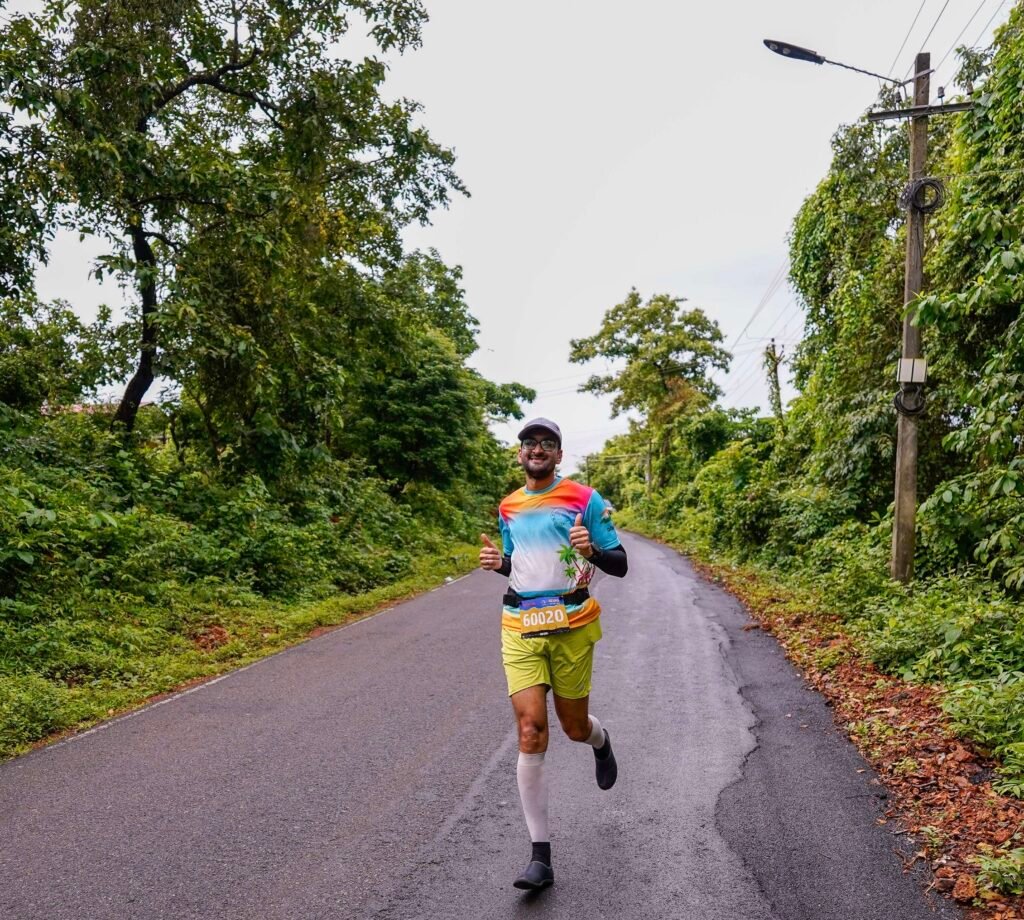
I enrolled for a strength program, and that made a visible difference. Later that year I ran the Bengaluru Marathon in 3:53. My target was 3:45, but considering I was returning to the marathon after many years, I was satisfied.
Soon after, I signed up for Malnad Ultra 50 km to test my legs on elevation. The race started well but everything unraveled around 25 km. Severe gastric issues made it a painful grind to the finish. I was disappointed because the training had been solid.
After 13 years of running, one thing is clear: not every race will go your way. In fact, success probably comes only once in every three or four races.
But when things don’t go well repeatedly, confidence does take a hit.
My eyes then turned to the magical three‑digit number — the coveted 100 km in a single day.
The Epic DNF – December 20, 2025
RunAddicts Ultra was supposed to be that race.
The first 30 km went according to plan, though I was slower than usual — similar to Malnad. From 30 to 50 km we ran through heat, but with good company. Running in the heat has always been my weakness. Slowly, the mental battle began.
Negative thoughts started overpowering the intention to finish. My friend Yashas kept encouraging me. One part of my mind said, “Just survive another three hours — evening will set in and things will get easier.” The other voice kept asking, “Why are you even doing this? Why suffer in this heat? Maybe you should just stick to marathons and focus on improving timing.”
At 62 km, I quit. DNF.
The WSU Journey Begins
I had already registered for White Sand Ultra along with my training group, even before the RunAddicts race. The idea was that it would become my second 100 km.
After the DNF, my mindset shifted. I started thinking of going back to focusing on marathons. I even considered cancelling the registration since the cancellation window was still open. Fortunately — or unfortunately depending on how you look at it — during one of our training runs I received a strong “lecture” from Dr. Anuradha, Dr. Adithya, Ravi, Maruti and others.
Their message was simple: Don’t cancel. Show up. That conversation planted a seed.
I didn’t cancel the race, but I still hadn’t decided if I would actually run it. A few more training runs with the group changed things. Slowly the idea of avenging the DNF started taking shape. Around the same time, I watched an old video from the Tokyo Olympics where a Sri Lankan athlete refused to quit despite extreme difficulty. That moment created a subtle but powerful shift in my mindset. Earlier, in workouts like AMRAP, I would mentally decide a number of reps and stop there. Now I push till the final second.

It is not just about showing up. It is about staying till the end. That has been one of the biggest lessons running has taught me.
By then, the decision was made.
Training Phase
In January 2026 we did a self‑supported 50 km run to Kanakapura. Some of us finished under six hours. I ran alongside Yashas while Shashi would occasionally join us. It turned into a long conversational run — the best kind — and more importantly, a huge confidence booster.
Next came the Delhi Marathon in February. I followed a structured plan with Srini and the team. Training was going well until I fell sick three weeks before the race. My toddler brought home a flu from school, which quickly spread to me.
I trained whenever I could.
The day before the race, I knew I wasn’t at my best — but I showed up.
The first half went beautifully. A controlled effort gave me a 1:42 half marathon. But around 28 km the legs started fading. The final 10 km became a grind and I finished in 3:45.
Fifteen minutes off the target.
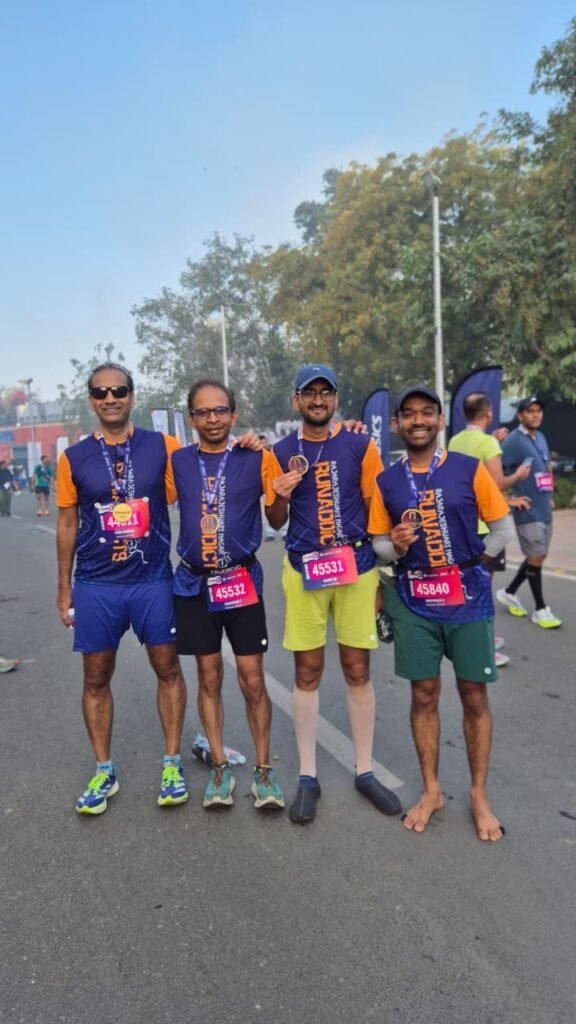
Part of me was happy because I enjoyed most of the race. Another part was disappointed — the third race in a row that didn’t go exactly as planned.
Lesson for me: we control the training and the process. The result of one day… does it really define everything?
One Month to Go
After returning from Delhi, I took a week off to recover. The following week I added mileage again. By then I had fully recovered from the fever.
Two weeks before the race we did our usual back‑to‑back weekend runs to simulate tired legs.
Saturday
16 km easy – 1:38Hrs (6:06/km)
Sunday
25 km progression – 2:24Hrs (5:45/km)
The highlight was the final 11 km at sub‑5:00 pace on tired legs with Yashas and Maruti. That session surprised me. I didn’t know I could push that hard on fatigued legs.
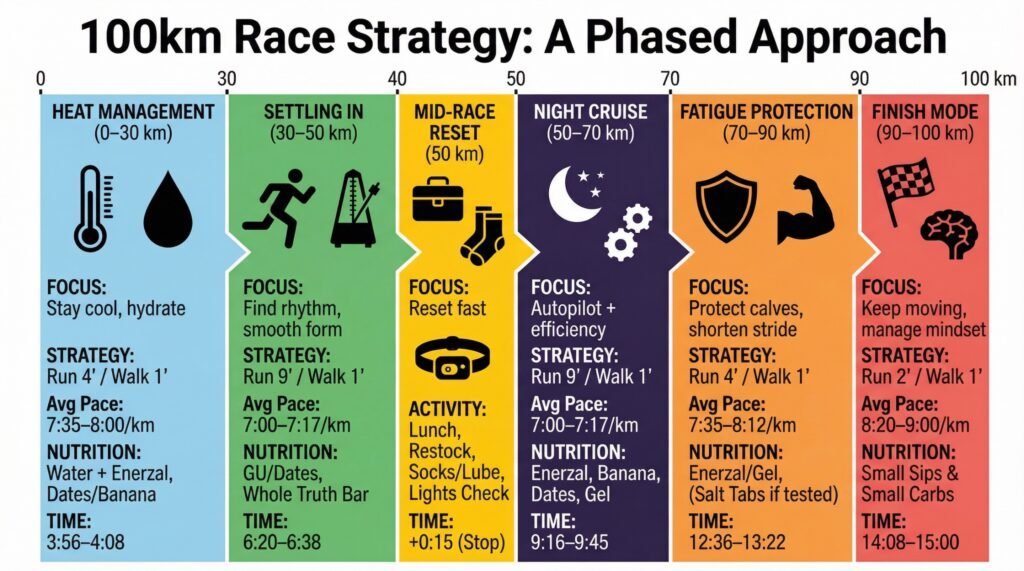
For the race, I planned to start with a run‑walk strategy right from the beginning to conserve energy.
Few Days to Go
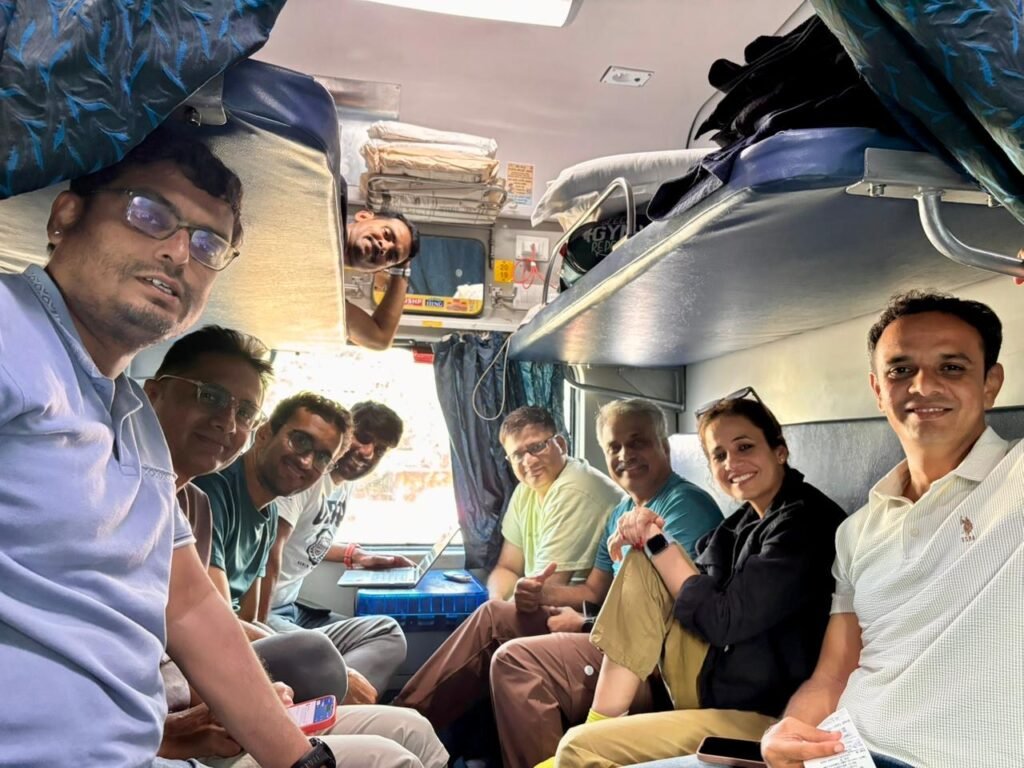
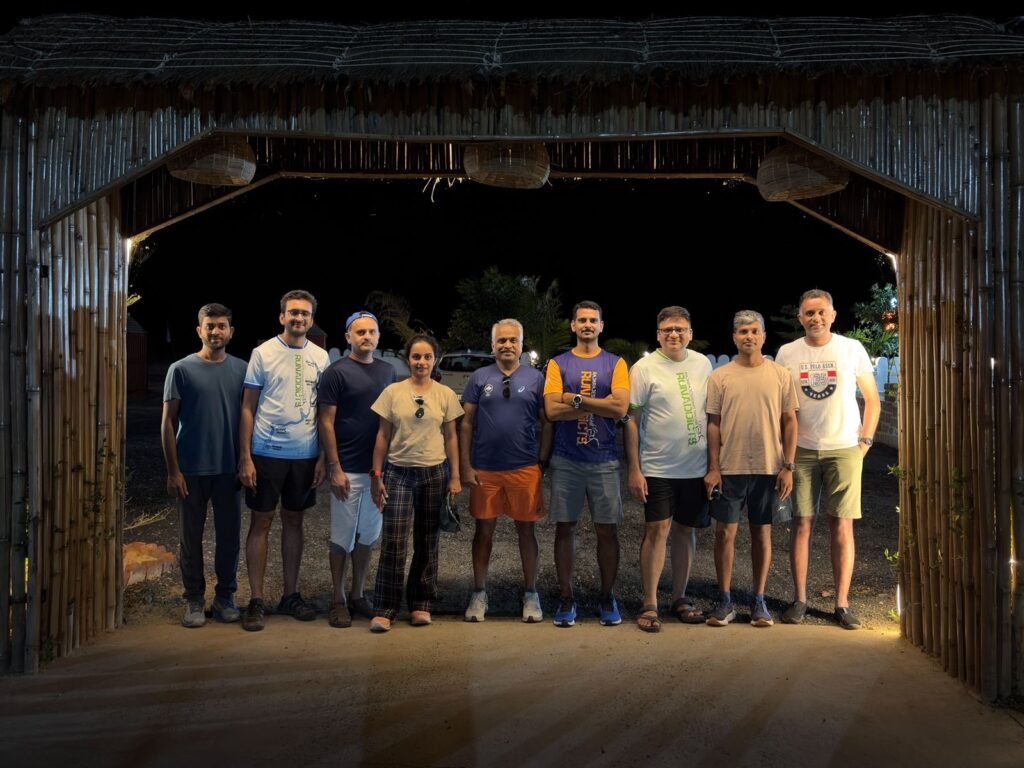
Our group traveled by train from Mumbai to Bhuj. It turned into a fun adventure even before the race began.
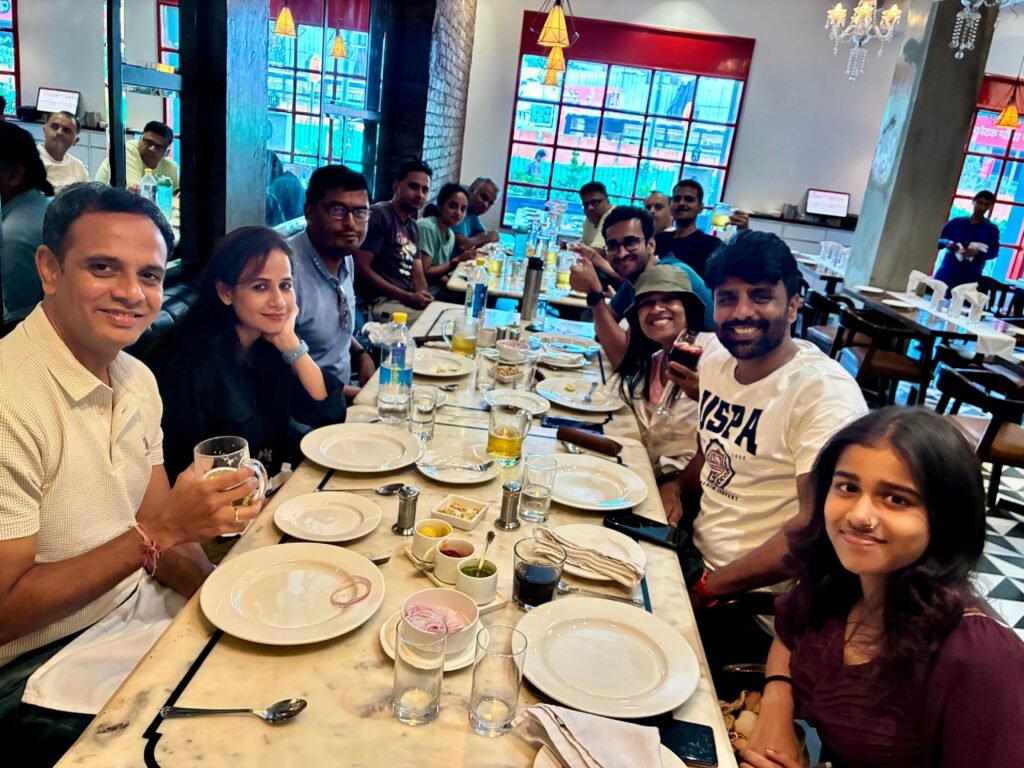
We focused on electrolyte loading and good carbohydrate intake for three days.
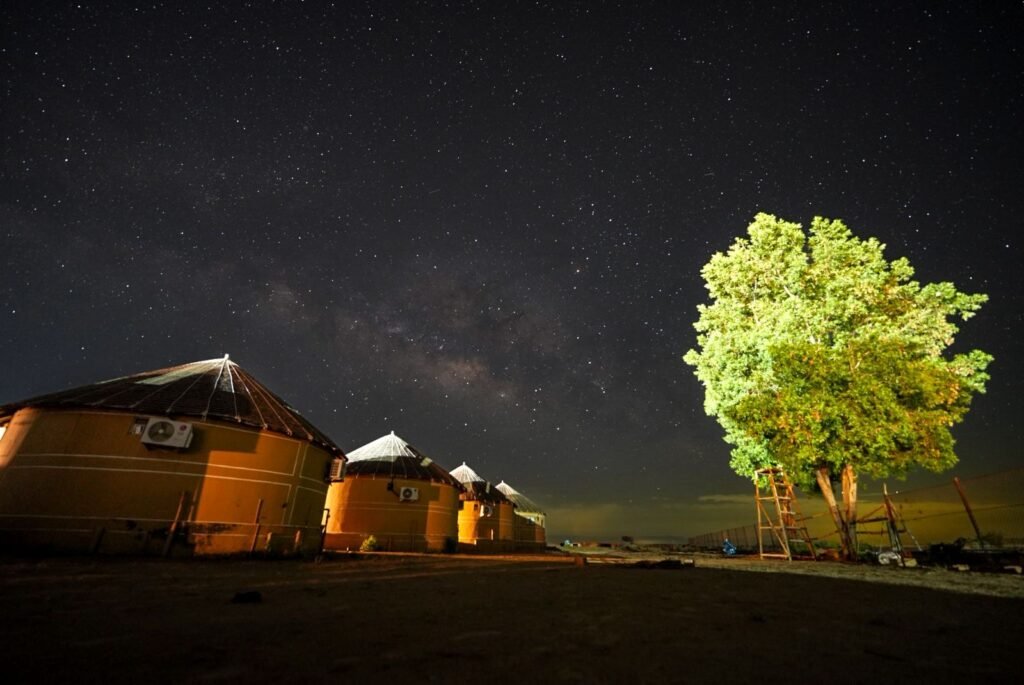
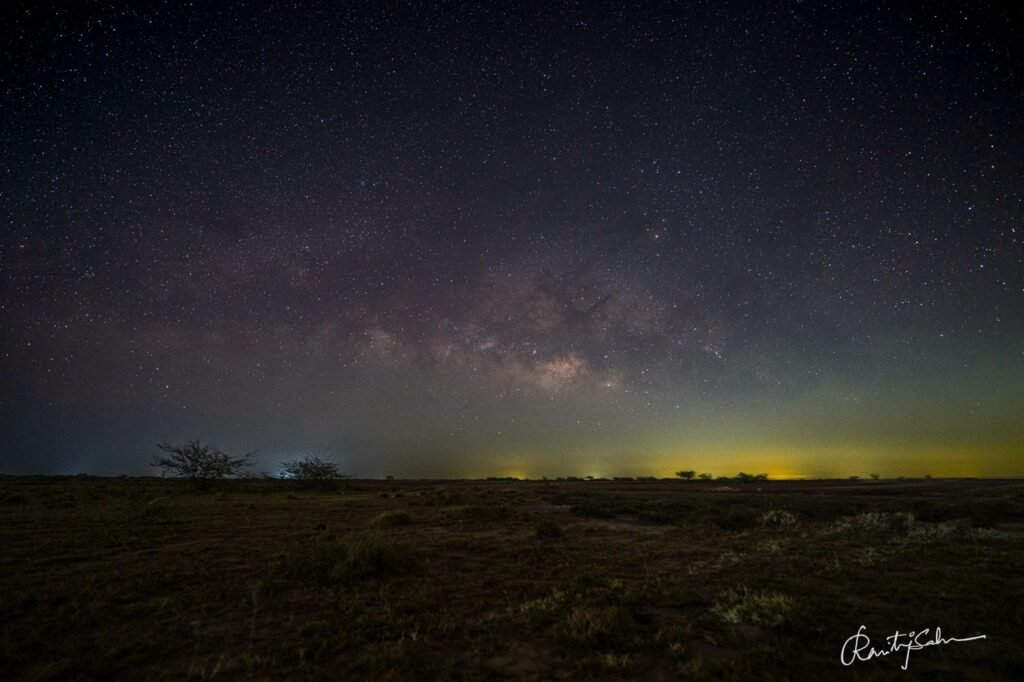
There had been unexpected rain in the region earlier, which gave us hope for cooler weather. Unfortunately, race day returned to its harsh desert personality, though occasional cool breezes offered brief relief.
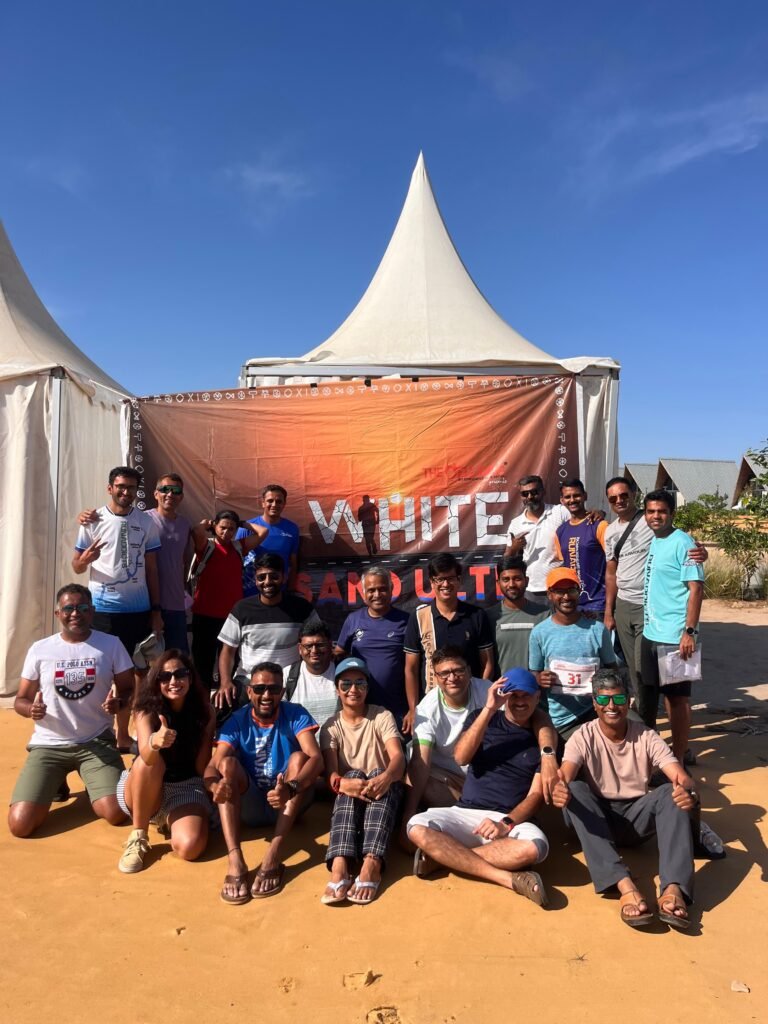
Race Day
What is White Sand Ultra?
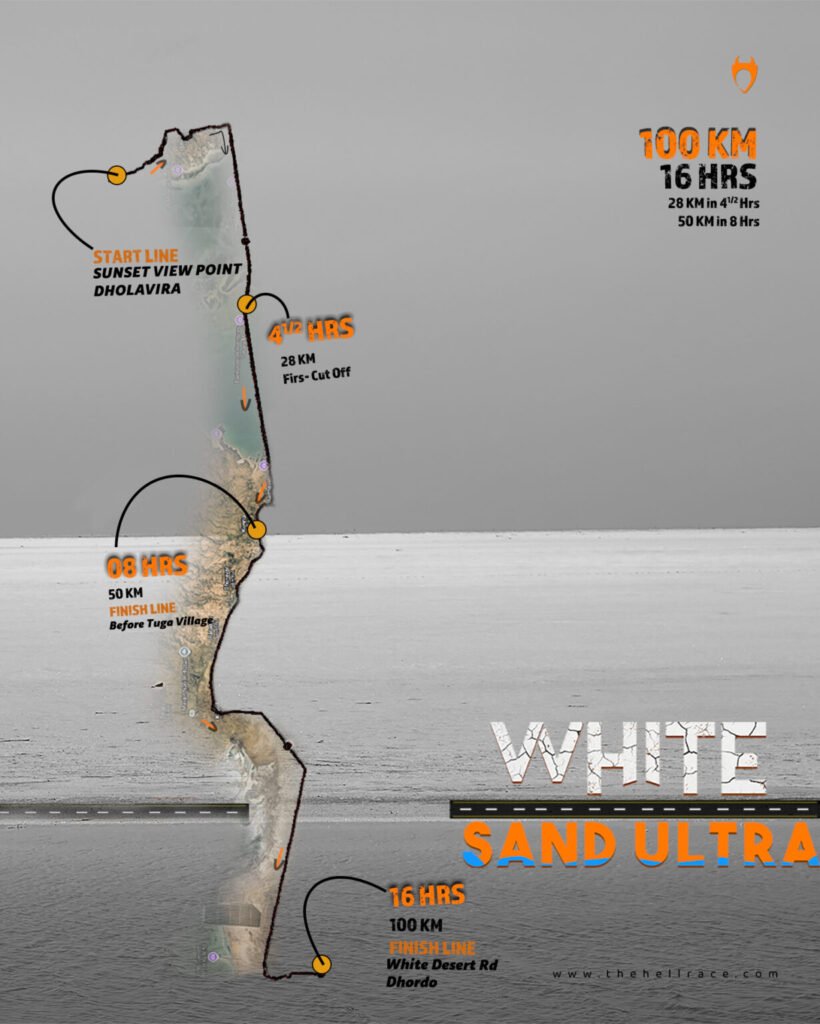
Google describes it as one of the toughest desert ultras in India. A remote course through the Rann of Kutch with long exposed stretches, minimal support, and extreme weather.
At the start line, I looked at the 50 km runners and felt happy for them — they would finish this ordeal in half the time. Then I looked at the 100‑mile and 135‑mile runners and felt grateful — at least I didn’t have to suffer that much. Perspective changes quickly in ultra running.
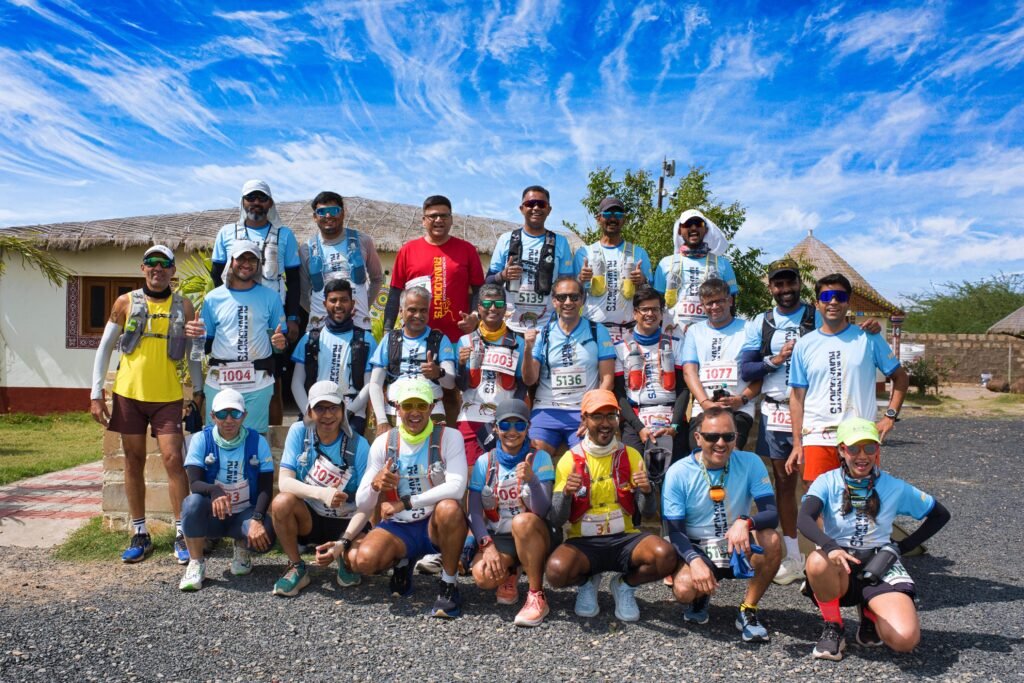
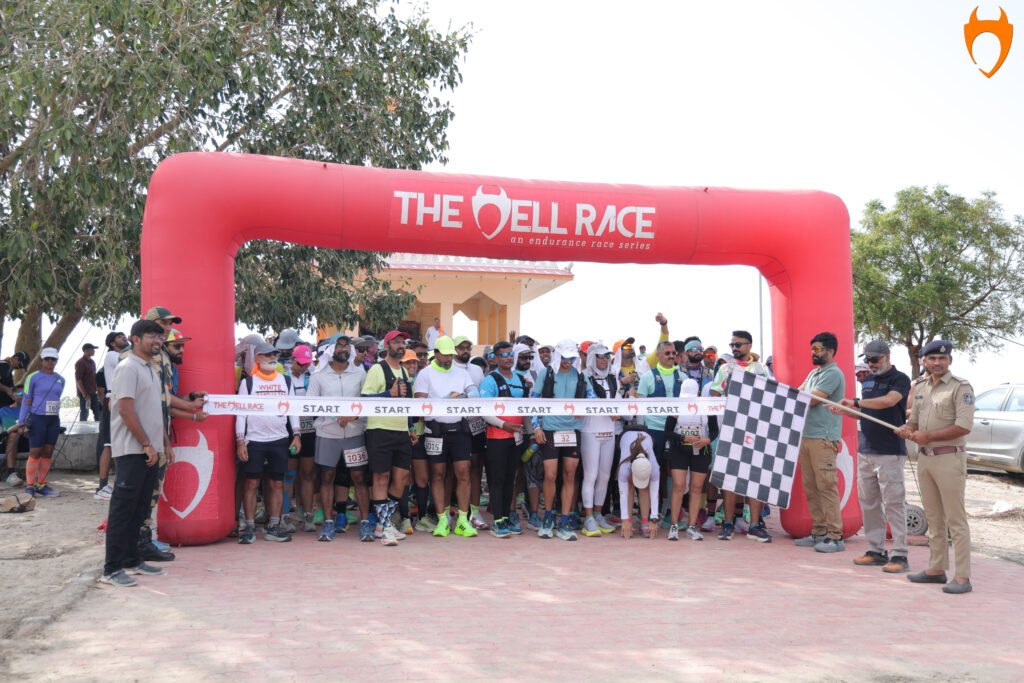
I remembered a conversation with Dr. Anuradha. A shuttle driver had asked her, “Do you run this for fitness?”
Her reply was perfect.
“No. Nobody runs this distance for fitness. For fitness you go to the gym or run short distances. Running beyond 50 km… and that too in a desert… that is madness.”
Maybe she is right.
For many of us, ultras are about exploring limits — pushing the boundaries of what the mind believes is possible. It is mental endurance in its purest form.
And contrary to popular belief, in ultras you don’t walk because you are tired of running.
You walk strategically: to conserve energy, to save the calves on climbs, and sometimes simply to keep moving forward.
0–21 km: Finding Rhythm in the Desert
The first few kilometres were slow as I adjusted to the hydration pack, the heat and the terrain. Soon I caught up with the group and we settled into our planned run‑walk strategy.
It was a rolling course, so we brisk‑walked the uphills.
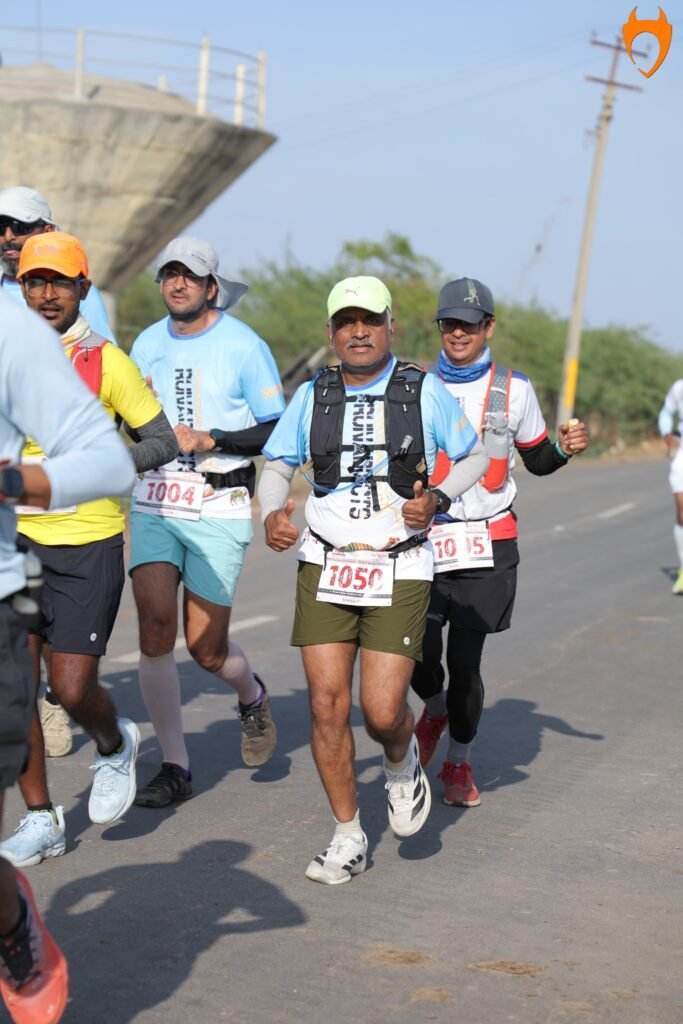
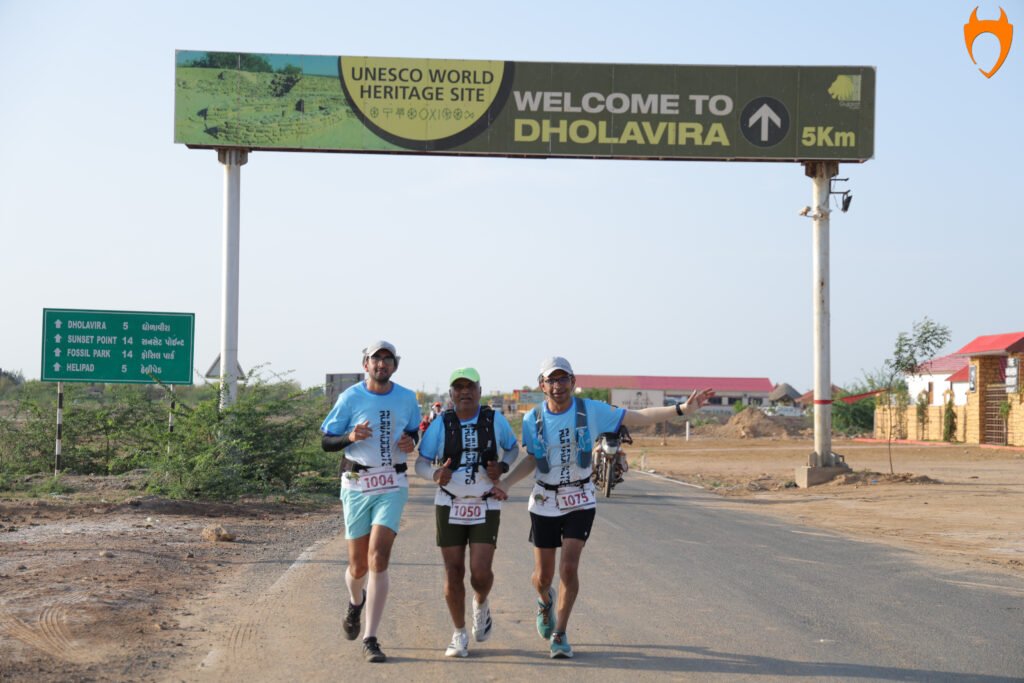
Within 3–4 km the order of runners naturally formed. Srini and I were together, Shashi slightly ahead. Dr. Inna stayed around us while Mahesh ran ahead.
The heat was brutal. My new cap turned out to be a lifesaver, the sweat cooling the back of my neck.
Aid stations were placed every 7 km and the rules were strict — any external help from locals or friends meant disqualification. No personal crew except near the baggage area.
Having run Goa Ultra earlier by the same organizers, I was prepared for minimal support. But this race surprised me — the aid stations were excellent.
By the second aid station (14 km) I already felt drained. Maruti and his group were there briefly before we moved ahead. Soon the 50 km runners took a different route and we turned toward a long stretch known as the “Road to Heaven”.
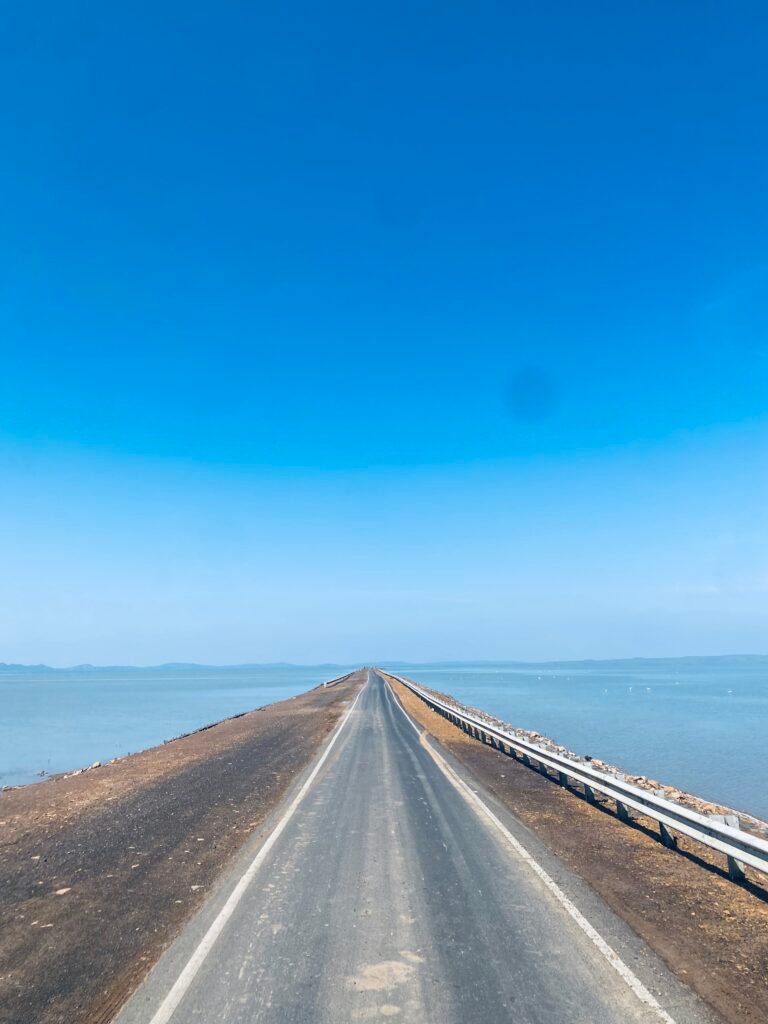
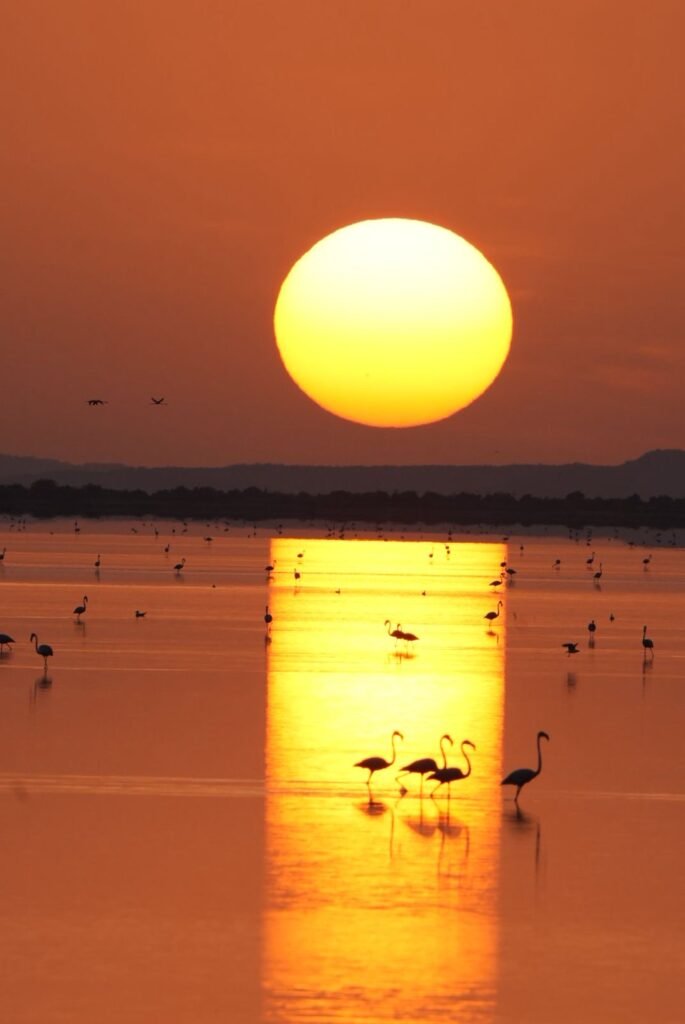
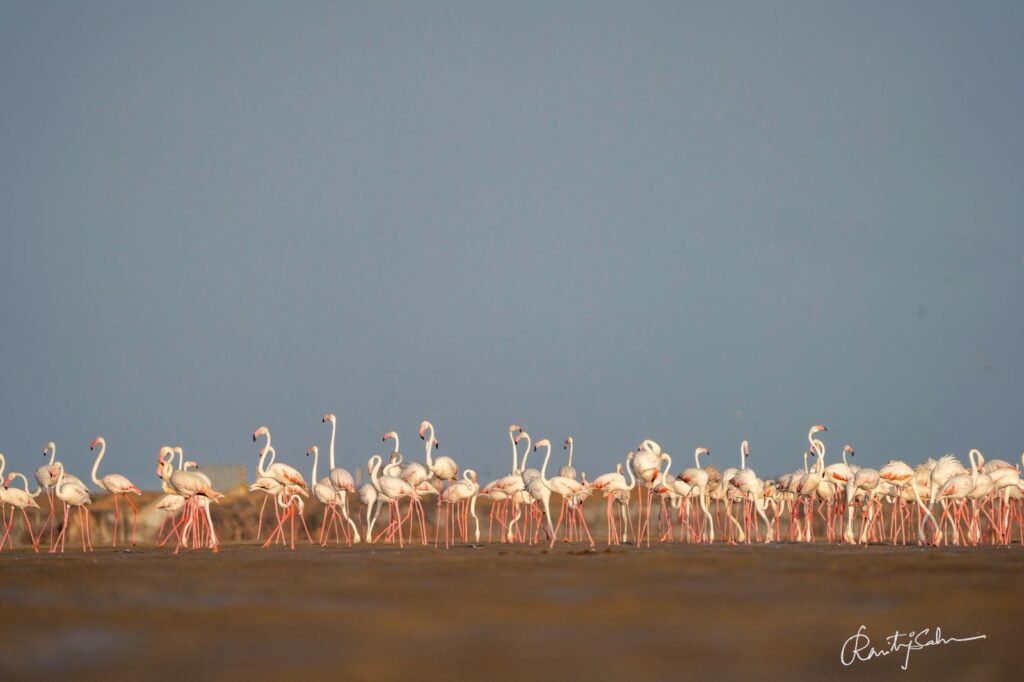
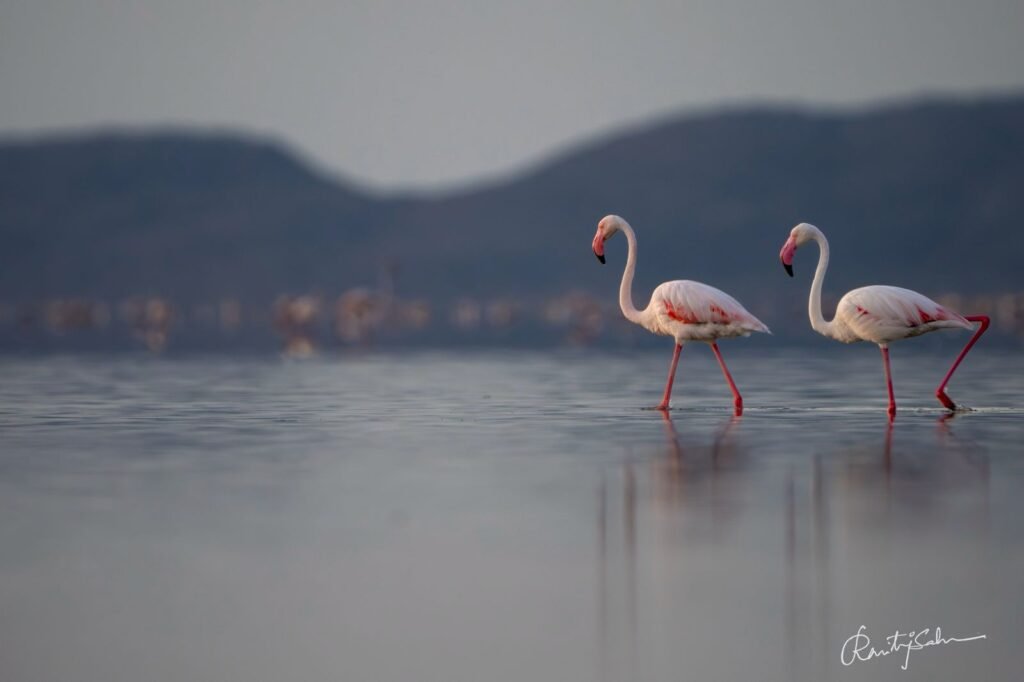
It was a 31 km flat road with flamingos visible on both sides.
The previous evening we had visited the same stretch during sunset with cool breeze and beautiful views. Twenty‑four hours later it felt like a vacuum — endless road, scorching heat, and silence.
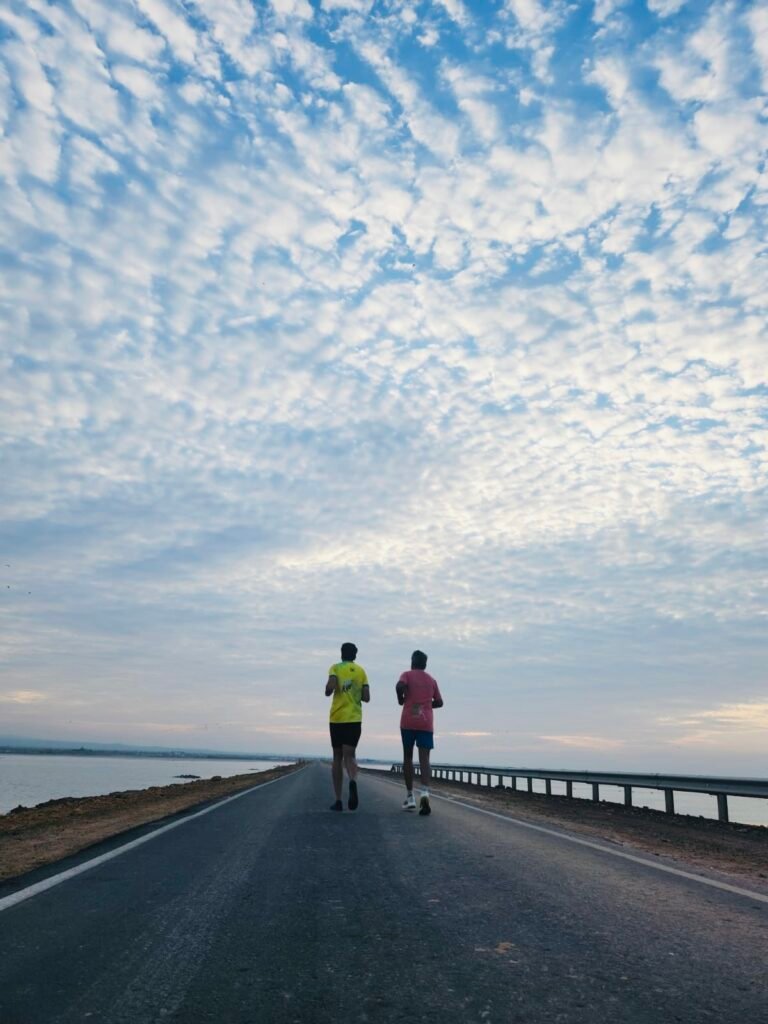
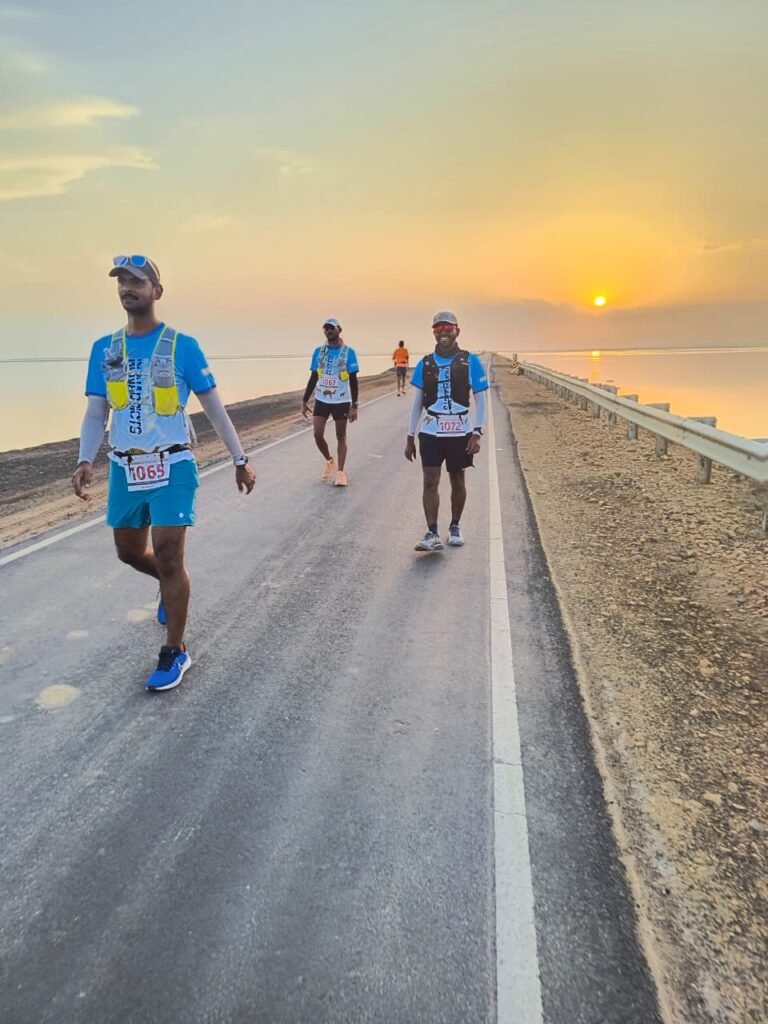
We stuck to the 900 m run – 100 m walk strategy. By 21 km, everyone regrouped at the aid station.
21–44 km: Running Into the Long Night
The sun slowly dipped but the heat lingered. The road felt endless. Spirits, however, stayed strong. After the 28 km aid station we switched on our headlamps. The road turned pitch dark — no lights, no landmarks, just a narrow beam of light ahead.
It felt like running on an infinite treadmill. Whenever a vehicle approached, we had to step off the road and return again. Shashi and Inna were tired and preferred slowing down. For a while we switched to a 400 m run – 100 m walk pattern. Eventually they asked us to move ahead.
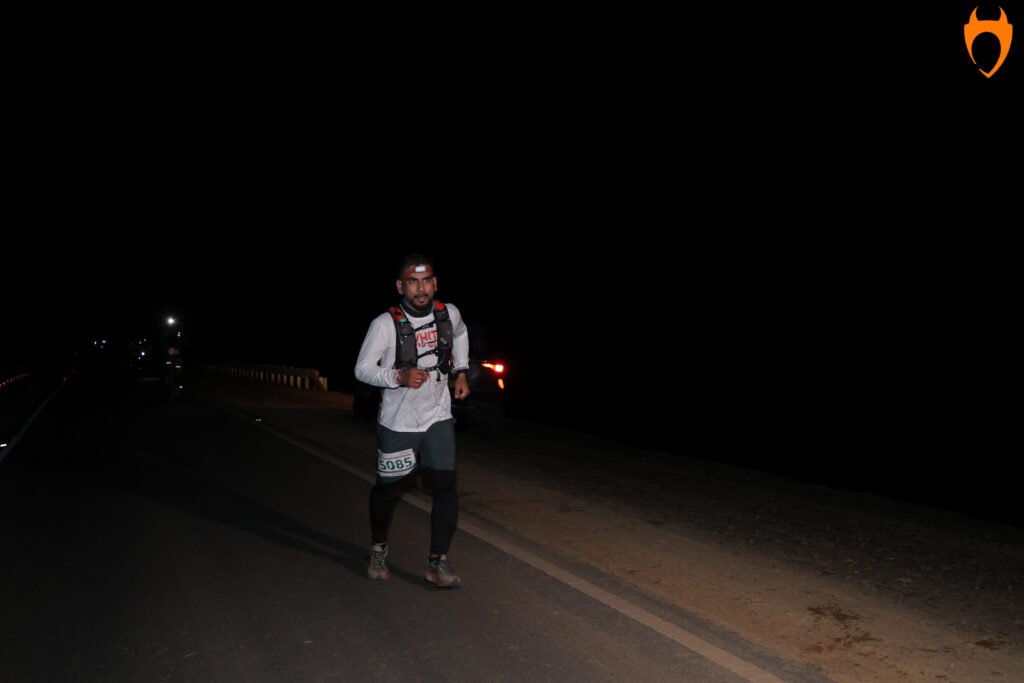
The three of us continued.
Strangely, the tired legs I normally feel around 50–60 km appeared at 30 km itself. I reminded myself: it is going to be a long night. No quitting.
To fight the monotony I started playing the Hare Krishna Mahamantra on my phone, it helped. Near the 35 km mark Maruti and his group caught up with us and we ran together briefly, gaining back some lost time. Dinner was unexpectedly placed at 44 km instead of 50 km. I would have preferred the psychological milestone of 50 km.
At the station I cleared my stomach, changed socks and shirt, but experienced a strange brain fade. I didn’t feel like eating. Mahesh insisted I eat something. I did — but later wished I had eaten more.
Lesson: In ultras, eat even when you don’t feel hungry.
Srini decided to stop at this point.
We spent about 30 minutes there, refreshed ourselves, and stepped back onto the course.
56 km still to go.
44–70 km: Into the Silent Miles
Now it was just Mahesh and me. The roads became even more deserted. Runners were scattered far apart. We decided to take it aid station by aid station. The darkness made the rolling terrain feel steeper than it probably was. Occasionally dogs, cats, and massive cows appeared out of nowhere. Some runners joined us briefly but our strategies differed. In ultras, mismatched pacing can drain both runners. Thankfully Mahesh and I were in sync.
Around 58 km we did some quick math.
42 km remaining. 8 hours left.
Even at a conservative 5 km per hour we would reach 40 km. That meant we needed to squeeze a couple of faster kilometres somewhere. By now hunger had set in — the consequence of eating too little earlier. I suggested Mahesh move ahead to secure those extra kilometres just in case we reached the cutoff. I assured him I would stay on my feet for the full 16 hours even if it meant finishing 90 or 95 km.
He refused. “We started together. We finish together.”
We continued.
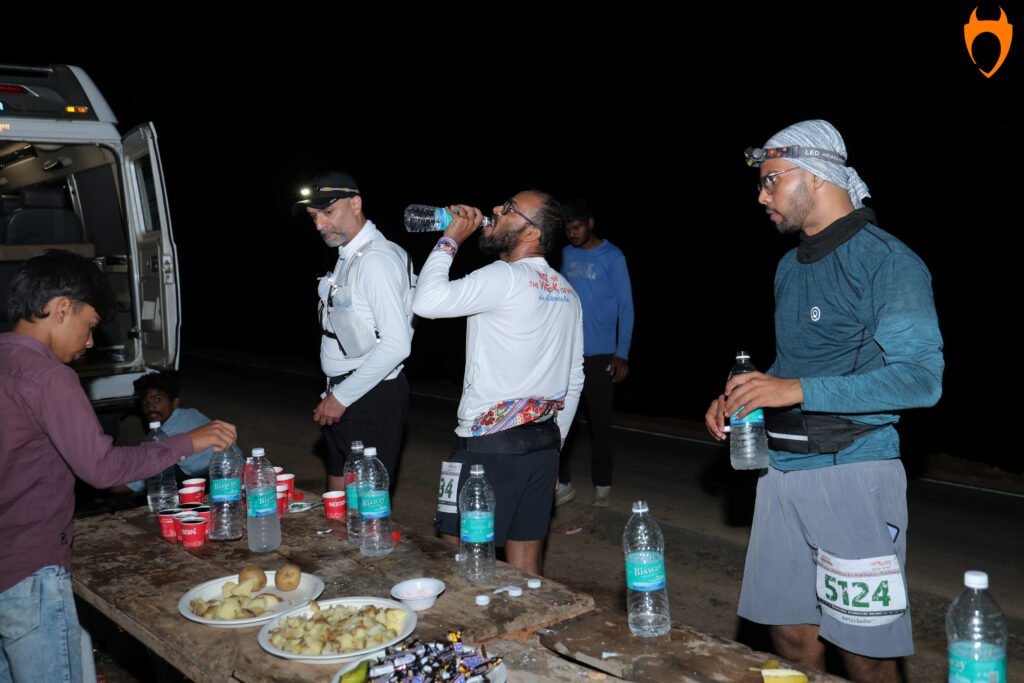
I carried four gels and planned to take one every 10 km. At aid stations the routine was simple: refill water, add Enerzal, eat banana or orange, grab a Snickers and move.
My earlier prediction to Anand during a training run was finishing 70 km in 10 hours. We reached it in 9 hours 55 minutes. Confidence quietly returned.
We entered Khavda village — the gateway to the final challenge.
70–100 km: The Final Test
My longest single‑day distance earlier was about 76 km during the Bengaluru–Mysore run. Now we were stepping beyond that. The race director had warned us — the next section would be the real hell. The road towards Dhordo began as a wide four‑lane stretch but soon narrowed. Massive trucks thundered through the highway. Every time one approached we had to step off the road into loose rocks and climb back up again.
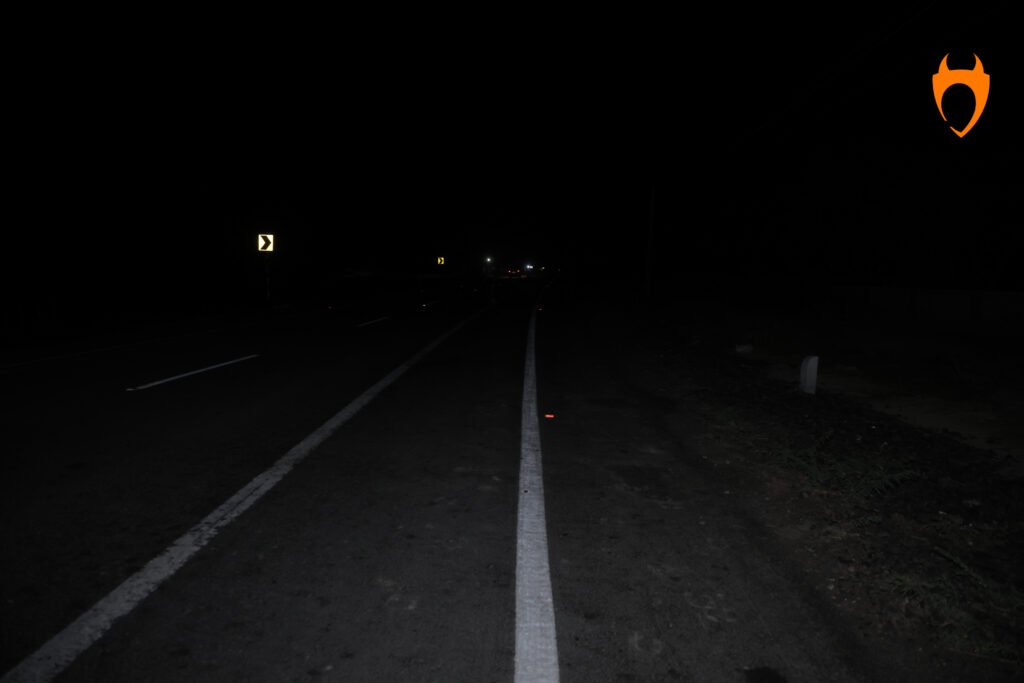
Even spotting a truck 4–5 km away meant waiting ten minutes before it passed.
Still, we kept moving.
Run a bit.
Mahesh pauses.
Walk together.
Repeat.
Kilometre after kilometre. Hour after hour.
The aid stations looked deceptively close in the distance — like the classic warning on car mirrors: objects are closer than they appear.
Blisters had formed on my forefoot earlier and later on the top of my foot. I avoided removing my shoes, hoping the pain wouldn’t worsen.
Lesson learned: Vaseline on top of the foot too.
Also, waist hydration packs work well up to 50 km — beyond that a shoulder hydration vest is far better.
Despite everything, our pace stayed consistent at about 7–7.5 km per hour. We limited aid station stops to under two minutes to maintain a buffer for the final stretch.
At 92 km we finally exited the “hell zone”. An aid station appeared at 94 km. Relief.
Six kilometres left and enough time. We took the final turn toward the Rann Festival grounds. The feeling was surreal. Running often enters our lives by accident. A few years ago I would never have imagined running 100 km through a desert night. Life reveals its surprises only when you look back and see how far you’ve travelled.
Finish Line
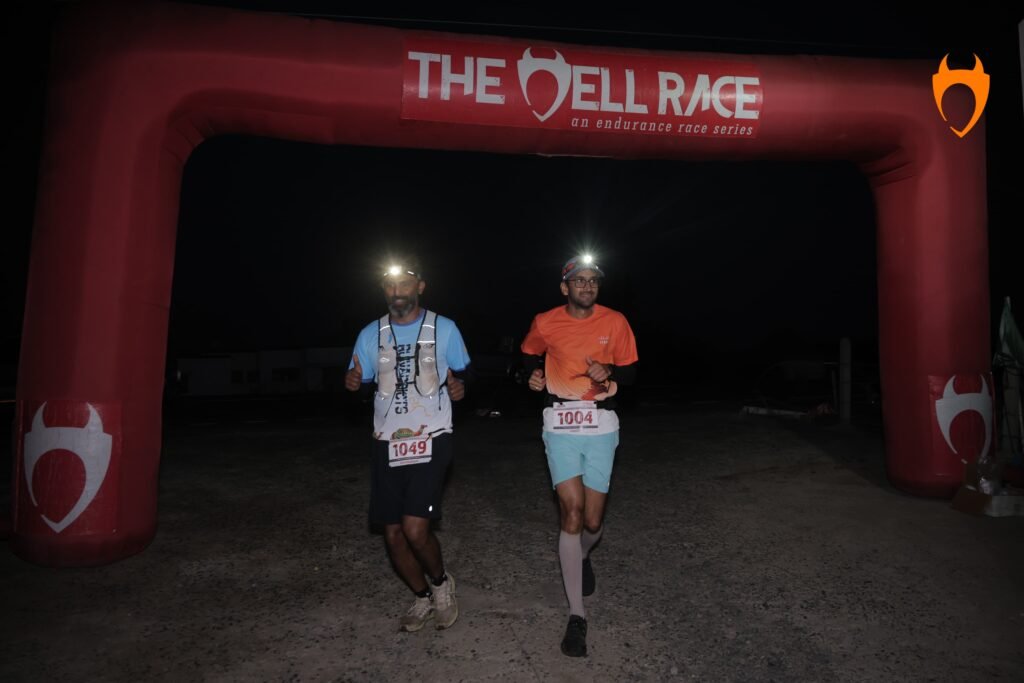
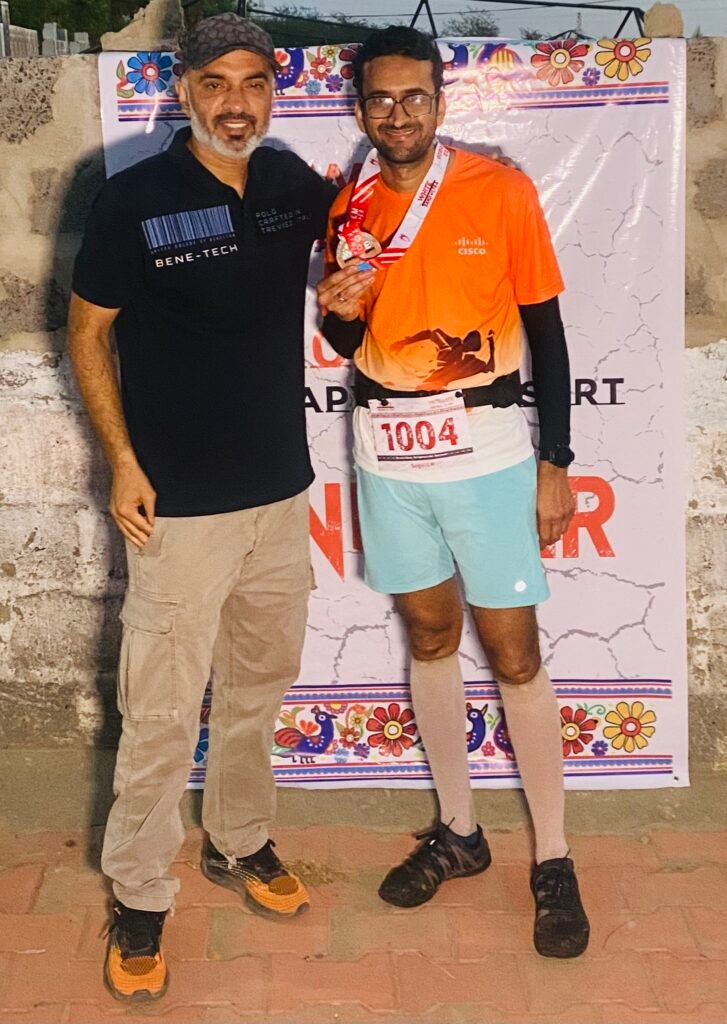
Mahesh and I crossed the finish line together.14 hours 17 minutes.
Overall 10th place.
Results can swing either way in ultras, but the process always matters more. The early morning runs, the strength sessions when the body feels tired, the patience to stick to a strategy when things get uncomfortable — those are the real victories. The result is just the outcome of a single day, but the process is what shapes you as a runner.
On the way back we met Deepak and Dr. Anuradha and wished them luck for their longer distances. Later we saw Shiva and Vijay pushing through the harsh conditions toward their own finish.
That sight reminded me again — every finisher has a story.
What Next?
For now, I want to continue the training rhythm and focus more on strength work this year. I don’t have any big race goals yet. But I’m surrounded by crazy runners who are always searching for the next impossible challenge. So, I suspect something will show up soon.
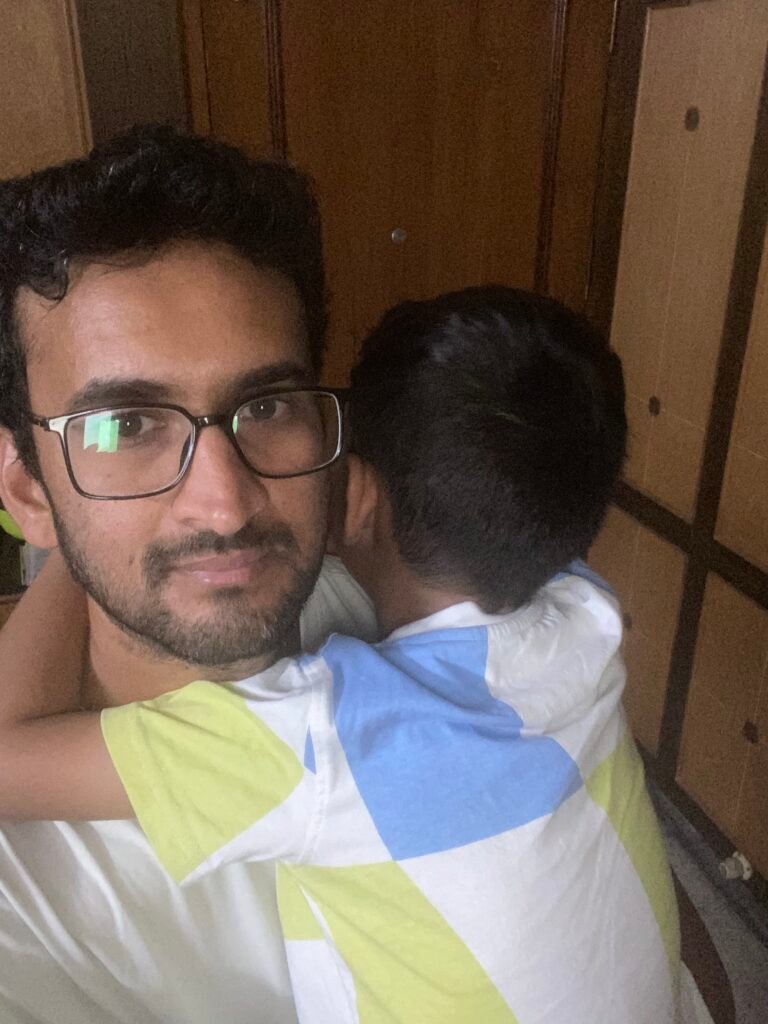
100 km in the desert… but the best finish line was waiting at home.
I hope one day this journey inspires my son Rey in his own pursuits. Thanks to Divya for being the person behind the person I am today. Thanks to the RunAddicts family — my extended home. Thanks to the vegan community for constantly proving that we can perform at the highest levels of endurance sport. And to the runners who quit this time — you know who you are. Come back stronger.
Hare Krishna!

DNF today… legend tomorrow 💪 Desert tested, not defeated.